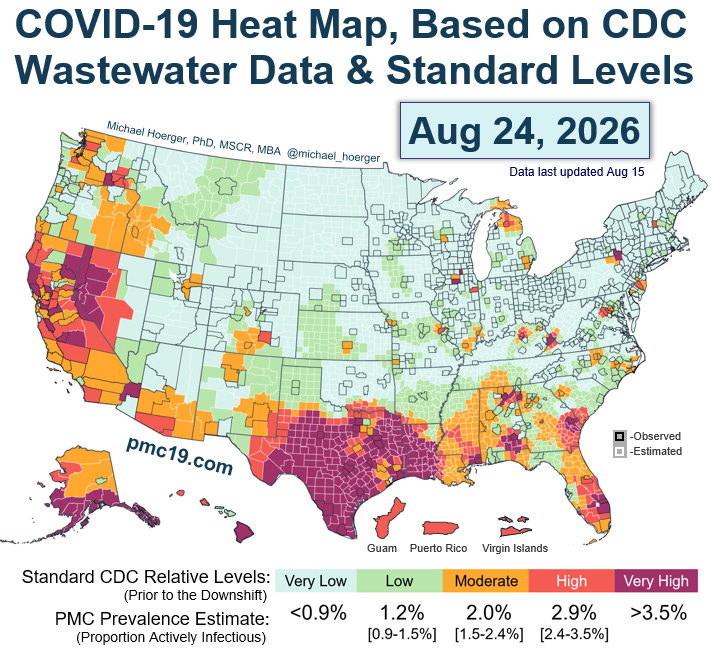
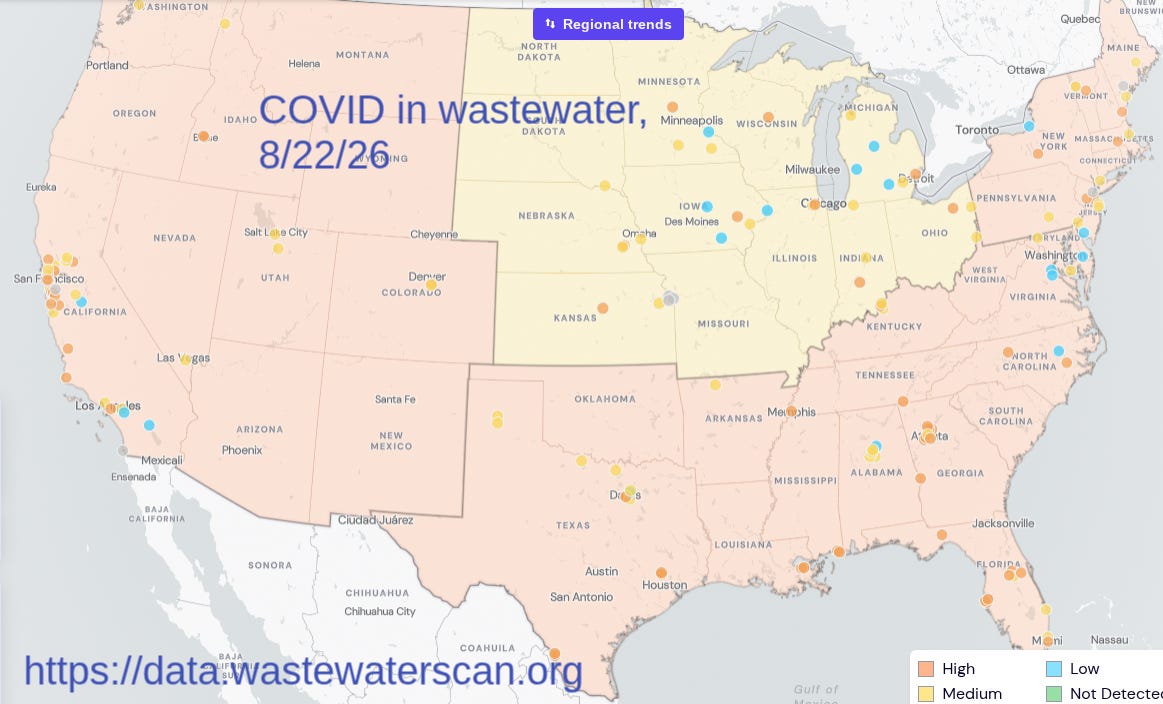
The summer COVID wave is here, especially in the Gulf South and Western states. Michael Hoerger estimates that every 1 in 136 people is currently infected with COVID nationally, with hot spots in Texas (1 in 20 people), Mississippi (1 in 23 people), California (1 in 42 people) and Hawaii (1 in 40).
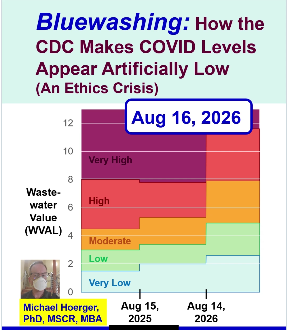
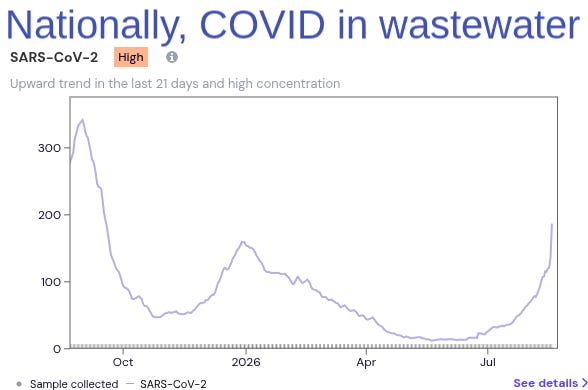
Dr. Hoerger also posted, “On Friday, the US CDC arbitrarily shifted higher COVID [wastewater] levels into lower categories depicted with cooler colors.” So Texas, with 1 in every 20 people currently infected, would have been labeled “Very High” a week ago, but is now erroneously labeled as “High” by the CDC.
Wastewater
From: WastewaterSCAN
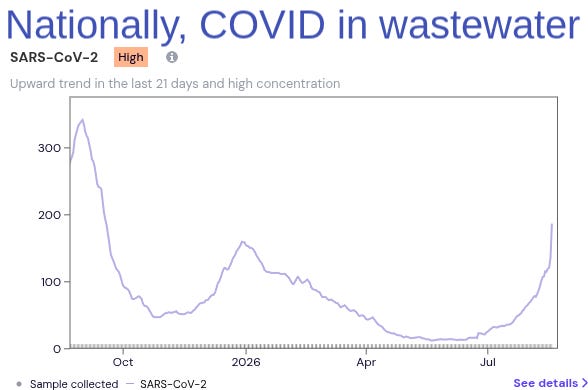
CDC wastewater COVID data through 8/15/26:
Acute COVID infections, General COVID info
Post-COVID impairment of T cell responses to community-acquired pathogens can be modified by activating cellular metabolism | PLOS Pathogens 7/30/26
Researchers from the University of Chicago and Northwestern tracked blood samples from 31 healthy people before and after COVID infection and found that memory T cells lost the ability to properly respond to common pathogens like influenza, Staphylococcus aureus, and chickenpox virus. Post-COVID plasma showed depleted carnitine and TCA cycle metabolites needed for energy production, and 93% of participants had impaired mitochondrial function in at least one pathogen response. Metformin and ubiquinol partly restored the deficit in vitro, suggesting existing drugs may be helpful.
SARS-CoV-2 Associated Shifts in the Upper Respiratory Tract Mycobiome in Non-hospitalized Cases | Mycopathologia 8/19/26
Researchers at CSIR-NEERI examined the upper respiratory fungal communities of non-hospitalized COVID cases and found notable shifts in composition, including higher levels of Candida, Malassezia, and Aspergillus and increased overall fungal diversity. These changes reflect shifts in microbial colonization rather than active fungal infection.
Pediatrics
Cardiovascular Involvement of Multisystem Inflammatory Syndrome in Children | Journal of Cardiovascular Echography 8/20/26
Italian researchers studied 29 pediatric MIS-C patients with cardiac complications (pericarditis, valvulitis, myocardial dysfunction, and coronary artery dilation) and found “MIS-C with cardiovascular involvement has a substantial incidence of acute myocardial dysfunction, particularly in patients with higher levels of TroponinT and BNP and in those who developed macrophage activation syndrome (MAS).” MAS corresponded to a 12x greater risk of adverse outcomes. Subtle imaging abnormalities remained detectable beyond seven months in approximately 10% of the cohort, underscoring the need for extended cardiac follow up in children who have MIS-C.
Vaccine imprinting drives increased SARS-CoV-2 variant infection in children | BioRxiv 8/14/26
NIH Vaccine Research Center researchers studied 108 children and found that those whose immune systems were first shaped by Omicron developed measurable gaps in protection against a later variant. The results suggest pediatric vaccination strategies may benefit from broader initial variant coverage rather than relying on a single circulating strain.
Vaccines
Pre-vaccine sentinel antibodies predict blunted vaccine responses | Cell Press Blue 8/20/26
Researchers at Arizona State University’s Biodesign Institute analyzed blood samples from more than 4,000 people and found “pre-existing antibodies to common microbes, including Staphylococcus aureus, respiratory syncytial virus, and human respirovirus 3, consistently predicted post-vaccination antibody responses in both healthy and immunosuppressed populations. These broadly prevalent antimicrobial antibodies represent sentinel antibodies that may serve as biomarkers of system-level humoral immune competence.” Sentinel antibodies may help guide personalized vaccine care.
Mode of T cell priming durably shapes the TCR repertoire, effector function and α4β1 integrin expression of human virus specific CD4+ T cells | bioRxiv 8/20/26
University of Oxford scientists studied 14 participants and found that natural SARS-CoV-2 infection produced lasting changes in spike-specific CD4+ T cells detectable 3 to 4 years later, marked by elevated α4β1 integrin expression and cytotoxic programming. In contrast, vaccine-based priming steered CD4+ T cell memory toward follicular helper and Th1 phenotypes, demonstrating that how the immune system first encounters an antigen durably determines the character of the T cell response it generates.
Immune imprinting in a changing world | Nature Immunology 8/14/26
Researchers cataloging more than 1,000 antibodies found that Omicron exposure activated previously untapped B cell clones targeting new regions of the virus while also reawakening older immune memory. This dual response produced antibodies that were both potent against the variant and able to recognize a broader range of viral targets.
Long COVID
👁️ Microvascular remodeling and endothelial dysfunction across the post-COVID-19 spectrum: a prospective observational case-control study | BMC Medicine 8/21/26
TUM School of Medicine and Health researchers studying 300 participants found that Long COVID was associated with reduced retinal vessel dilation and narrower arterioles, with the most pronounced changes observed in those meeting ME/CFS criteria. Elevated levels of the adhesion molecules ICAM-1 and VCAM-1 in these patients indicate that dysfunction of the blood vessel lining persists well beyond the acute phase of COVID infection.
Circulating MicroRNA ratios as diagnostic biomarkers for long COVID with an independent validation cohort | Communications Medicine 8/21/26
A study from the Medical University of Vienna analyzed serum microRNAs in 206 Long COVID patients and 71 uninfected controls and identified two circulating microRNA ratios (hsa-miR-484/hsa-miR-126-3p and hsa-miR-345-5p/hsa-miR-223-3p) that were reproducibly reduced in Long COVID patients across both a training cohort and an independent validation cohort. “hsa-miR-484 has been reported in the context of mitochondrial and endothelial dysfunction, while hsa-miR-126-3p plays a central role in angiogenesis and vascular inflammation.” Machine learning methods confirmed that these two ratios may serve as diagnostic biomarkers, although the AUC was only 0.68.
Gut microbiome signatures during acute infection are associated with long COVID | Gut Microbiomes 8/20/26
Researchers at Mayo Clinic analyzed 799 outpatients and found that individuals who went on to develop Long COVID showed measurable differences in gut microbiome composition within the first month of SARS-CoV-2 infection. The most pronounced microbial changes were tied specifically to gastrointestinal symptoms, sensory disturbances, and fatigue among those who developed the condition, which affects an estimated 10 to 30% of people after a mild COVID infection.
These findings raise an important question: Could interventions targeting the gut microbiome during or shortly after acute infection reduce the risk of Long COVID? Clinical trials would be needed to determine whether prebiotics, probiotics, or other microbiome-directed treatments have any preventive benefit.
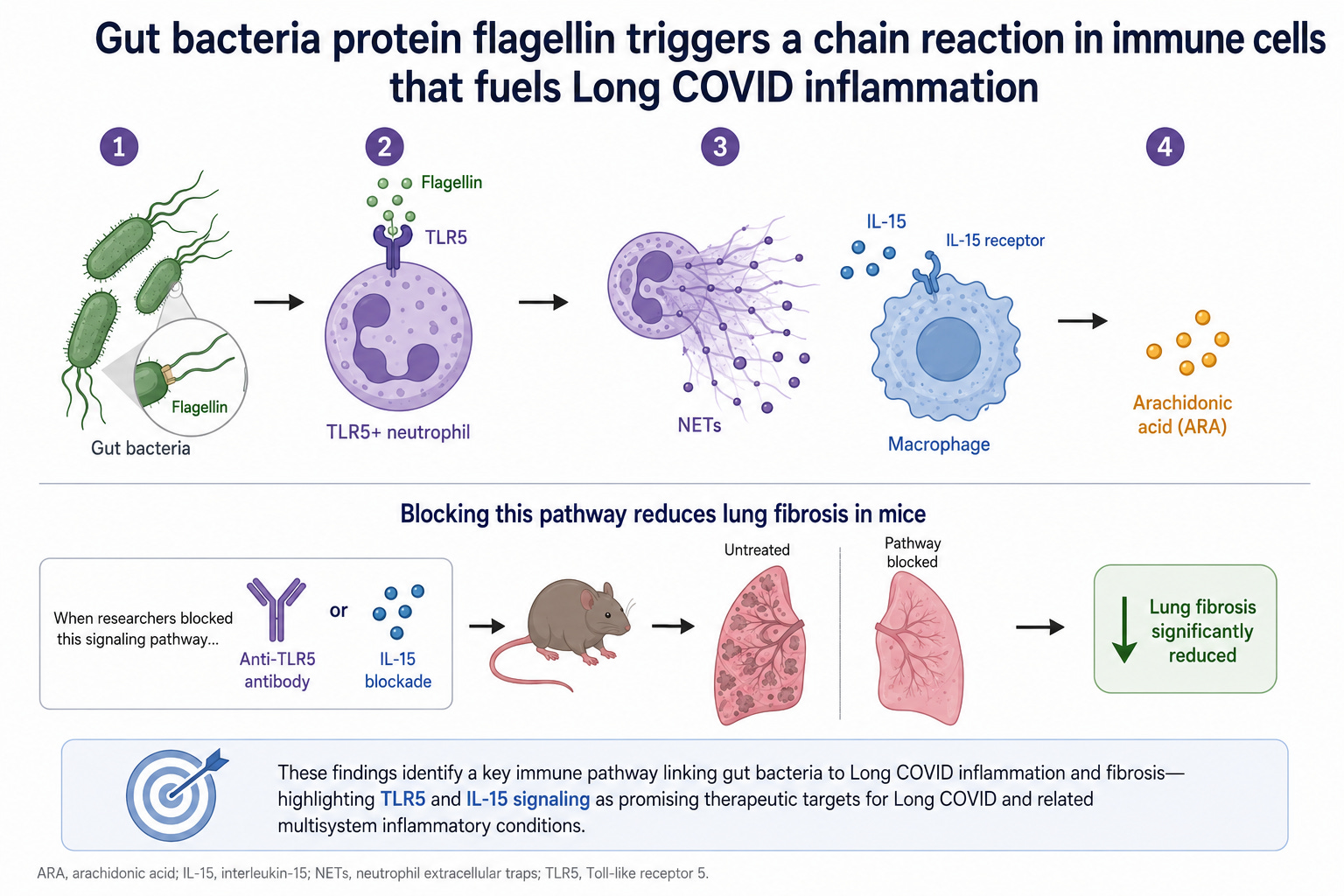
Intestinal flagellin drives multisystem inflammation through TLR5-IL-15-ARA axis | Gut 8/20/26
Chinese scientists studied 558 people with inflammatory conditions including rheumatoid arthritis (RA), ankylosing spondylitis (AS), inflammatory bowel disease (IBD) and Long COVID found that a gut bacteria protein called flagellin triggers a chain reaction in immune cells that was associated with and may contribute to systemic inflammation, including in the Long COVID group. Flagellin activates TLR5 positive neutrophils, which release IL-15 through neutrophil extracellular traps and prompt macrophages to produce arachidonic acid (ARA). When the researchers blocked the IL-15-ARA axis in mice, lung fibrosis was significantly reduced, pointing toward a potential therapeutic target for Long COVID and related systemic inflammatory conditions.
Molecular simulation reveals how the host thromboinflammatory C-type lectin receptor CLEC2 interacts with the receptor-binding domain of SARS-CoV-2 | Scientific Reports 8/19/26
Researchers from India used computational simulations to model how SARS-CoV-2’s receptor-binding domain docks onto CLEC2, a platelet receptor linked to thromboinflammation. The simulations identified multiple binding sites and contact points, offering insight into mechanisms behind COVID-associated clotting disorders and neutrophil extracellular trap (NET) formation. Lab testing is needed to confirm these computational findings.
🫀 From Multi-Omics to Mechanism: Nucleocapsid–RCHY1–JUNB Axis Underlies SARS-CoV-2 Related Atrial Fibrillation Vulnerability | Europace 8/14/26
Researchers from Nanjing Medical University found that the SARS-CoV-2 nucleocapsid protein blocks the breakdown of JUNB through the RCHY1 pathway, activating TNF-alpha and NF-kB signaling that promotes scarring in the heart’s atria. This cascade appears to raise the risk of atrial fibrillation after SARS-CoV-2 infection.
🫀 Systems biology analysis reveals miRNA–mRNA networks associated with cardiomyocyte responses to SARS-CoV-2 infection | npj Systems Biology and Applications 8/14/26
University of São Paulo researchers examined 29 autopsied hearts and 12 blood samples from COVID-19 patients and found immune cell infiltration, cardiomyocyte death, and fibrotic scarring in cardiac tissue. Lower blood levels of miR-29a correlated with activation of profibrotic gene programs, pointing to a regulatory role for this small RNA in COVID-related cardiac scarring.
Lung epithelial endothelin-1 drives iron dysregulation and skeletal injury after SARS-CoV-2 infection | Cell Reports 8/15/26
Hong Kong Polytechnic University researchers analyzed 27 lung samples and tissue from 8 cartilage donors and found SARS-CoV-2 spike protein persisting in cartilage even as nucleocapsid levels declined. The findings point to a lung-to-joint signaling pathway where endothelin-1 disrupts iron balance and damages cartilage and growth plates after infection.
🧠 Perivascular spaces in neuropsychiatric post-COVID syndrome | Research Square 8/18/26
Researchers from Germany studied 116 participants and found post-COVID syndrome was linked to larger MRI-visible perivascular spaces in the brain with age, especially near the motor cortex. Longer illness duration corresponded with greater perivascular space (PVS) volume, pointing to neurovascular changes as a possible driver of lasting neuropsychiatric symptoms.
Cardiovascular, Renal, and Pulmonary Risks of Long COVID: A Retrospective Cohort Study Stratified by Age and Sex | Journal of the American Heart Association 8/21/26
Researchers from the University of Iowa analyzed data from 315,612 adults and found that Long COVID elevated the risk of heart, kidney, and lung conditions across all age groups. Younger adults faced the steepest relative risks, with young women showing increased cardiovascular and renal risks, while young men showed 10x the risk of pulmonary fibrosis.
Measles
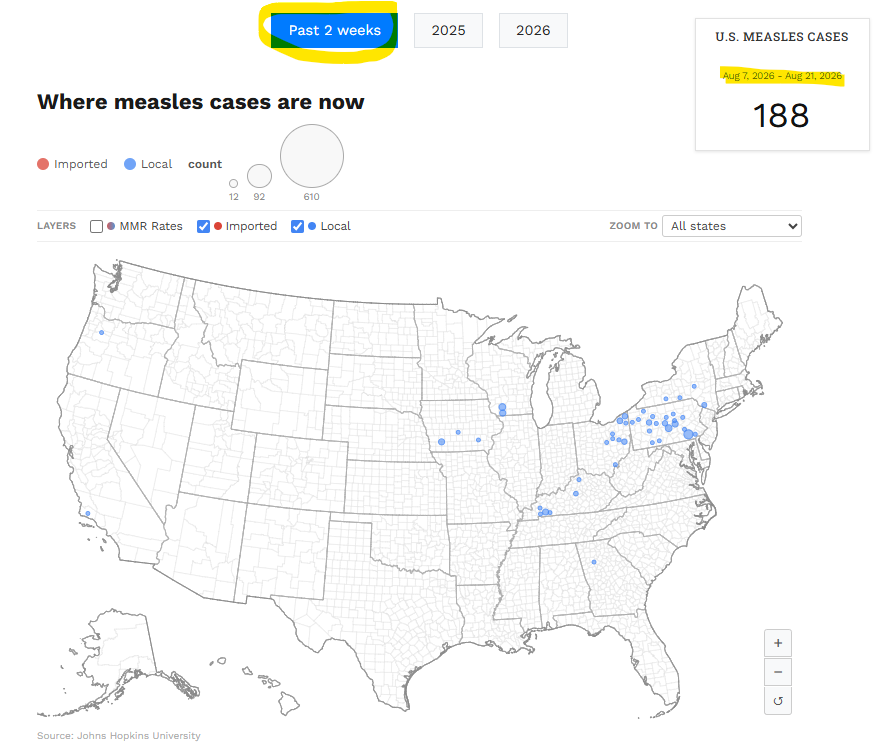
As of August 20, 2026, 2,777 confirmed measles cases were reported in the United States in 2026.
Johns Hopkins US Measles Tracker shows measles cases from the last two week:
Each measles case in 2025 US outbreak cost almost $60,000, study estimates, or $134 million total | CIDRAP 8/20/26
A new study shows that each measles case in the 2025 U.S. outbreak cost about $59,000 including the public health response. In 2025, those costs equal $134 million not including unreported cases. The 2026 outbreak so far is estimated to have cost more than $150 million.
Ebola in Democratic Republic of Congo (DRC)
As of 8/20/26 according to the Ministère de la Communication et Médias/RDC, there have been 5,375 confirmed Ebola cases in the DRC, including 1,167 recoveries and 2,557 deaths. 737 patients are currently in isolation or hospitalized. The case fatality rate is 47.6%.
Ebola outbreak becomes deadliest in Congo history | The Hill 8/18/26
Congo’s Ebola outbreak is now the country’s deadliest on record, spreading faster than any prior outbreak. Conflict, attacks on health facilities, and displacement are hampering response efforts. WHO’s Tedros Adhanom Ghebreyesus urged warring parties to accept a ceasefire, even temporary, to save lives.
Ebola spreading exponentially in Congo as death toll tops 2,500, UN says | Reuters 8/21/26
The UN’s senior Ebola coordinator, Julien Harneis, said the outbreak in the DR Congo has killed more than 2,500 people and is spreading exponentially across an area larger than France. He warned that funding will run out within weeks and that health workers face growing violence, with more than 260 attacks recorded in six months. Eight health workers have been killed from the violence and 43 more have died from Ebola infection.
U.S. Government Health News
Last week, the CDC moved the goalposts, so to speak, and shifted levels of SARS-CoV-2 in wastewater to lower categories. This week, the CDC is “updating” nursing home COVID data according to Mike Hoerger.
NSF set to issue lowest number of new grants in four decades | Nature 8/20/26
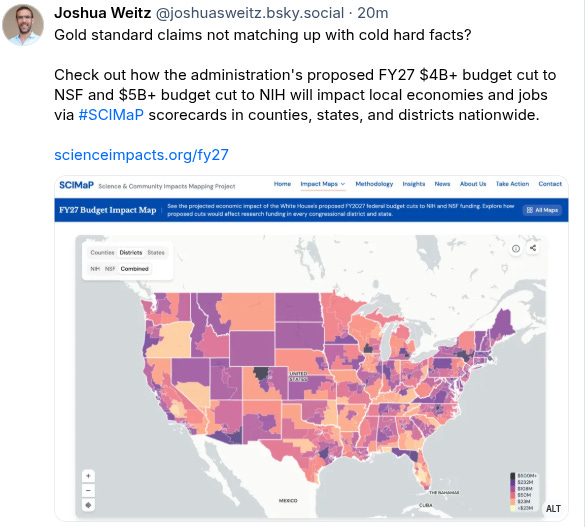
The National Science Foundation (NSF) will issue about 6,100 new grants this fiscal year, 46% fewer than the 2021-24 average and the lowest count in over four decades. “Sociology, archaeology, political science, economics and geography, received zero new awards.” The NSF is withholding $1 billion for a White House project called Grand Research Challenges, leaving many reviewed proposals unapproved.
Effects on local economies from loss of the NSF and NIH grants per Joshua Weitz:
Trump 2.0 has deleted or altered nearly 400 US datasets, endangering public health, education and more | The Guardian 8/18/26
A new tracker from dataindex.us, a group co-founded by former US chief data scientist Denice Ross, finds that federal agencies have deleted at least 28 datasets and altered 338 more over the past year and a half. Health related data makes up about 40% of the affected collections, including systems that track drug overdoses and violent deaths. Ross warns the losses could leave the country unable to see emerging public health threats.
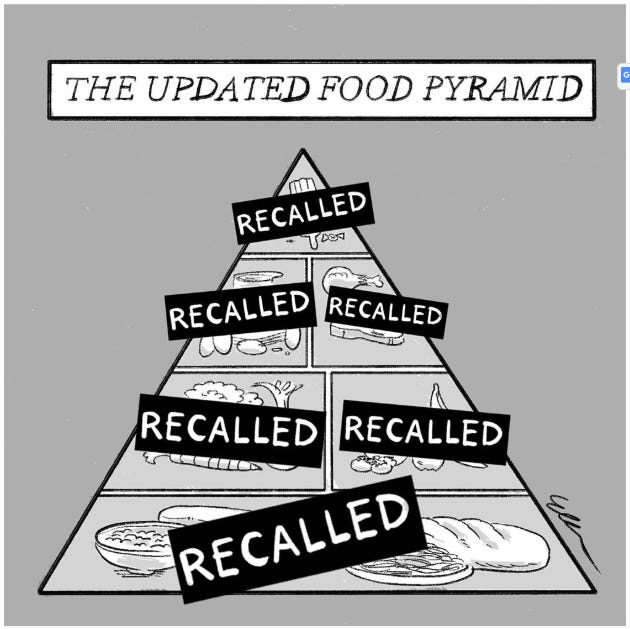
How Cyclospora Evaded the U.S. Food Safety System to Sicken Thousands | NY Times 8/15/26
The New York Times reports that a Trump administration delay of a food traceability rule slowed efforts to trace this summer’s record Cyclospora outbreak, which sickened roughly 14,000 people and hospitalized 740, including two deaths in Michigan. Investigators eventually linked cases to lettuce processed at a Taylor Farms plant in Mexico, the same supplier tied to a 2013 outbreak at Olive Garden and Red Lobster. Critics say years of eroding food safety oversight left agencies slower to respond.
NewYorker: Today’s Daily Cartoon, by Ellis Rosen.
What to know about Dr. Heidi Overton, Trump’s pick to lead the FDA | NPR 8/20/26
Dr. Overton has backed Trump’s push to unbundle the MMR vaccine into separate shots. She still needs Senate confirmation.
Other news
Moderna shares surge as melanoma vaccine with Merck succeeds in large trial | CNN 8/19/26
A study of in over 1,100 people with high-risk melanoma shows that a new treatment combining a personalized Moderna mRNA vaccine (Intismeran) based on mutations found in the patients’ tumor, plus Merck’s immunotherapy Keytruda, lowered the chance of the melanoma cancer coming back or spreading.
Virus-like particles enable targeted gene engineering and pooled CRISPR screening in primary human myeloid cells | Nature Biotechnology 8/18/26
Gladstone Institutes and UCSF researchers used virus-like particles to delete the gene TNFAIP3 in human macrophages, which released a natural brake on inflammation and boosted tumor killing by HER2 CAR macrophages even in hostile environments. Blocking TNF signaling reversed the effect, identifying TNF as a key driver of the enhanced anticancer response.
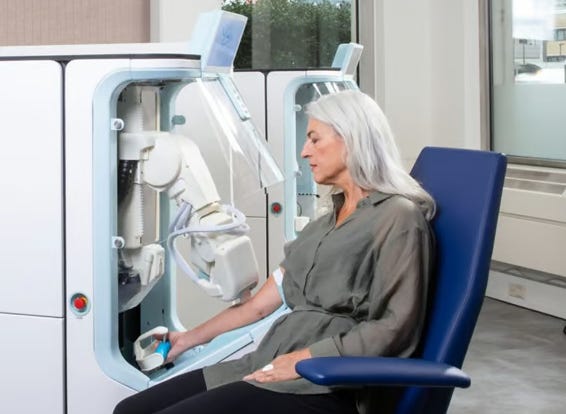
Meet Aletta: The first FDA approved robotic blood draw device | Fiercebiotech 8/20/26
The Aletta blood drawing robot has been used for 2 years in Europe and now is FDA approved in the U.S.
We Tested 13 Electric Scooters. We Don’t Recommend Any. | Consumer Reports 8/20/26
Consumer Reports tested 13 electric scooters and recommends none of them. Injury data shows e-scooter riders face high rates of serious harm, partly because standing riders have a higher center of mass and are more likely to fall headfirst. Even CR’s own testers were injured during the evaluation process.
Meta heads to court in a landmark trial about kids and social media addiction | NPR 8/17/26
Four state attorneys general are taking Meta to federal trial this week, accusing the company of designing Facebook and Instagram to addict children and of violating child privacy law. The states seek up to 1.4 trillion dollars in penalties, alleging Meta hid known risks to kids’ mental health and sleep. The trial is expected to last about six weeks.
TikTok Settles With U.S. Over Child Privacy Concerns for $400 Million | NY Times 8/21/26
SF infectious disease expert says it’s a ‘bad year’ for West Nile virus | SFGate 8/2026
The California Department of Public Health has recorded 30 human West Nile virus cases and three deaths so far in 2026, the highest activity level in five years. Infected mosquitoes and dead birds are turning up at elevated rates statewide, especially in the Central Valley and Southern California. Officials urge residents to use bug repellent and to drain standing water as peak transmission season continues into September.
World’s oldest living person celebrates 117th birthday | ABC 8/21/26
Ethel Caterham of Surrey, England was recognized by Guinness World Records as the world’s oldest living person when she turned 117 years old on August 21. Born in 1909, she marked the milestone with a private family celebration. Ethel’s secret to her longevity: “Never arguing with anyone, I listen and I do what I like.”

Have a great week,
Ruth Ann Crystal MD
References & Notes on COVID
COVID
Current Epidemic Trends (COVID, Flu, RSV): https://www.cdc.gov/cfa-modeling-and-forecasting/rt-estimates/?tab=0
Michael Hoerger modeling: http://pmc19.com/data/, https://twitter.com/michael_hoerger
Find the complete PMC dashboard at http://pmc19.com/data
US by State: https://pmc19.com/data/index.php#states
Worldwide data: https://pmc19.com/data/index.php#internationa
Wastewater
Wastewater SCAN (omits 12 states): https://data.wastewaterscan.org/
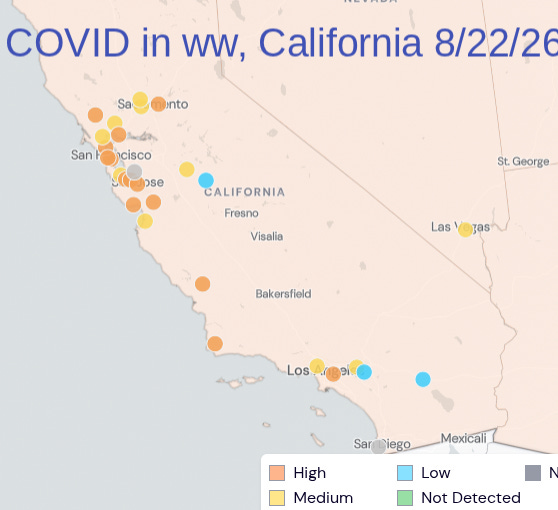
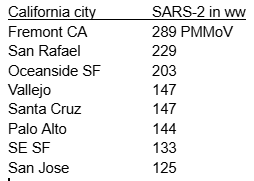
8/22/26:
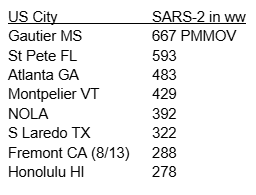
San Francisco Bay Area: WastewaterSCAN Greater SF Bay Area
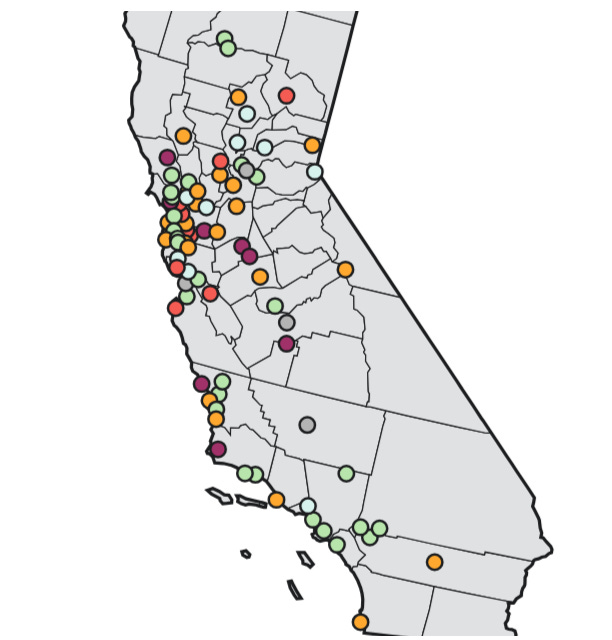
CDC wastewater reporting: https://www.cdc.gov/nwss/rv/COVID19-nationaltrend.html
However, High is the same as Very High was one week ago as the CDC changed their labelling.
CDC Wastewater STATE TRENDS: https://www.cdc.gov/nwss/rv/COVID19-statetrend.html
CDC California https://www.cdc.gov/wastewater/respiratory-viruses/state.html?cove-tab=1
CDC Very HIGH in Sonoma, Alameda, Stanislaus, Marin, Kings, SLO, Santa Barbara counties
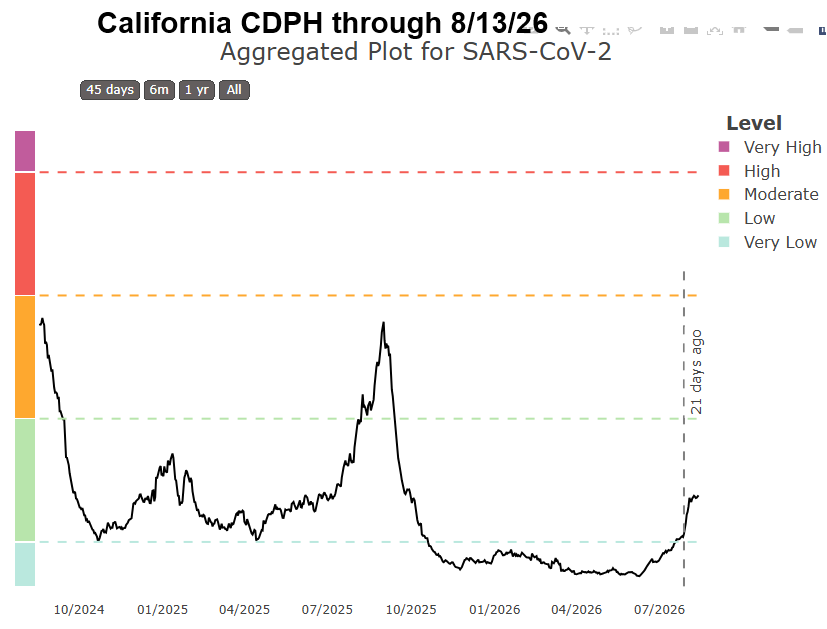
CDPH California SARS-CoV-2 in Wastewater:
California: CDC California | WastewaterSCAN California
Central Valley Area: WastewaterSCAN Central Valley
Los Angeles Area: WastewaterSCAN Greater LA
San Francisco Bay Area: WastewaterSCAN Greater SF Bay Area | WastewaterSCAN Marin County
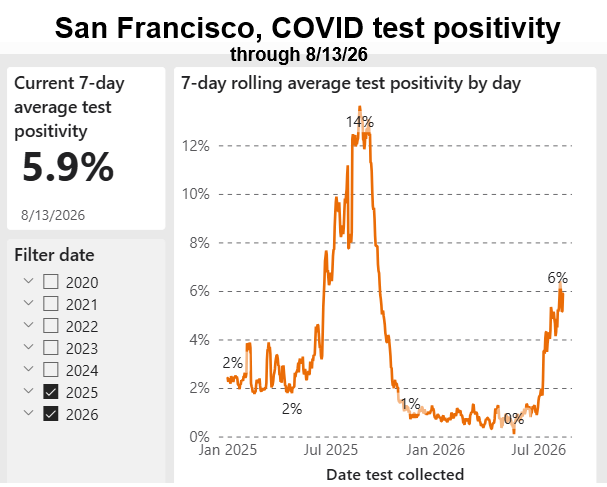
San Francisco COVID positivity rate: https://www.sf.gov/data--covid-19-testing-overview
International Surveillance
Mike Hoerger https://pmc19.com/data/index.php#international
Austria: Federal Government of Austria |
Canada: C19 Resources Canada * | World Health Network (WHN) Canada ** | Tara Moriarty Canadian COVID data | Canada national wastewater
Finland: WHN Finland **
Germany: WHN Germany **
Netherlands: WHN Netherlands **
Australia: Mike Honey
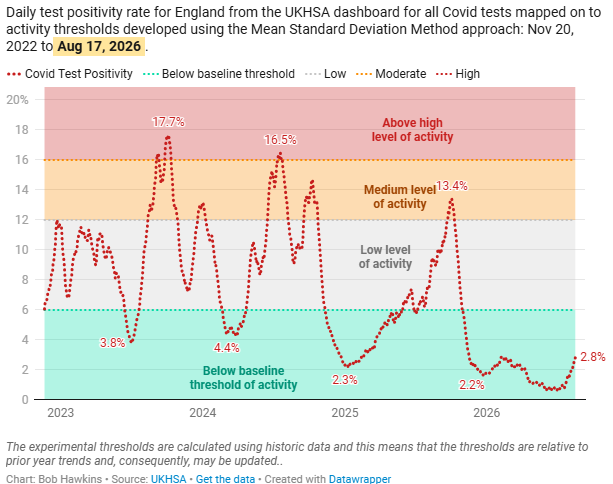
UK:
UKHSA Dashboard | UK BuDS | UK COVID PCR Test Positivity Map | Wastewater monitoring in Scotland |
“This week, key Covid indicators in England, Scotland, and Wales have risen slightly from low levels, suggesting that while the risk remains low, it is on the rise.”