Dr. Ruth Report, 8/2/26

The summer COVID wave(let) has started. COVID levels are low, but have started to rise with hot spots noted across the United States. Since 2024, COVID waves have peaked higher in summer than in winter, but each summer peak has been lower than the previous summer’s. If you are immunocompromised or are 65 or older, now would be a good time to get a COVID booster at your local pharmacy. No new COVID variants are causing the latest wave so far, so you will be given the same vaccine as was given last fall.
According to Michael Hoerger using CDC data through 7/18/26, about 1 in 198 people was actively infectious with COVID nationally with some hot spots noted especially in Alaska (1 in 55 people infectious), Florida (1 in 79), Washington state (1 in 88), Texas (1 in 94), New Mexico (1 in 94), and Georgia (1 in 125). WastewaterSCAN data from yesterday shows high levels of COVID in wastewater in Anchorage AK, Pinson AL, Roswell GA, New Orleans LA, St Petersburg FL, Honolulu HI, and Akron OH. See the graph below in the references section.
COVID Variants
A new COVID variant PJ.2.1 has been detected in a few places in the U.S. recently, but for now it is just being monitored.
Acute COVID infections, General COVID info
Semaglutide and COVID-19 mortality risk | Nature 7/29/26
Researchers at UC San Francisco analyzed more than 10 million people and found that semaglutide use for diabetes or obesity was associated with a 49% reduction in COVID mortality risk after statistical adjustment. The study was observational, so a causal relationship between the drug and the lower death risk has not yet been established.
SARS-CoV-2 ORF7a drives mitochondrial dysfunction via PDK4 activation and complex I inhibition | Cell Reports 7/28/26
Scientists at the University of Córdoba in Spain examined two human cell lines and found that the SARS-CoV-2 accessory protein ORF7a activates the enzyme PDK4, disrupting assembly of mitochondrial complex I and shifting cell metabolism away from efficient, oxygen based energy production. This reduces the cells’ capacity to generate energy while raising oxidative stress.
Circadian immunometabolic states impart a temporal response to SARS-CoV-2 spike proteins in mammalian macrophages | Microbial Pathogenesis 7/29/26
Investigators from Rensselaer Polytechnic Institute studied macrophages from three mice and one human donor and found that the body’s internal clock significantly changed how cells responded to SARS-CoV-2 spike protein depending on the time of exposure. The main shifts involved metabolism and mitochondrial function rather than the cytokine driven immune responses conventionally linked to COVID pathology.
Brain corticogenesis promotes SARS-CoV-2 neuro-glial tropism through lipid-dependent viral replication | Stem Cell Reports 7/23/26
A team at Yeungnam University found that as human brain organoids matured and neurons and glial cells developed, rising lipid metabolism made the tissue far more vulnerable to SARS-CoV-2 infection. Treating the organoids with gemfibrozil plus lovastatin, two cholesterol lowering drugs, cut viral RNA levels about 12 fold, pointing to lipid pathway drugs as a possible strategy against neurological COVID complications.
Charge-driven antiviral responses enhance autoreactivity in severe COVID-19 | Nature Preprint 7/25/26
Researchers at the Versiti Blood Research Institute studied 76 COVID patients and found that antibodies against SARS-CoV-2 gained a positive electrical charge as they matured. That charge strengthened spike binding but also caused the antibodies to cross react with human DNA and platelet factor 4 (PF4). Neutralizing the charge weakened binding to both the virus and these self antigens.
Pregnancy
Persistence of SARS-CoV-2 RNA Residues in Placenta Tissue Following Maternal COVID-19 Infection During Pregnancy | American Journal of Reproductive Immunology 7/29/26
Researchers at LSU Health Sciences Center analyzed 40 pregnancies and detected SARS-CoV-2 genetic material in 29 placentas, in some cases as long as 221 days after the initial maternal infection. The recovered viral genes were fragmented and lacked associated viral proteins, suggesting what persists is residual viral RNA rather than replication competent virus, though it may still contribute to a sustained inflammatory environment at the maternal fetal interface.
Pediatrics
The association of in utero SARS-CoV-2 exposure on neurodevelopmental outcomes at 12 and 22 months | Journal of Perinatology 7/24/26
Scientists at Mount Sinai Hospital tracked 142 infants born to mothers infected with SARS-CoV-2 during pregnancy. The children appeared developmentally normal at 12 months, but clinician administered testing at 22 months found that 52% scored below age expectations in at least one domain, most often language development.
Endothelial activation and thromboinflammation in Long COVID: revisiting the vascular axis in pediatric populations | Pediatric Research 7/29/26
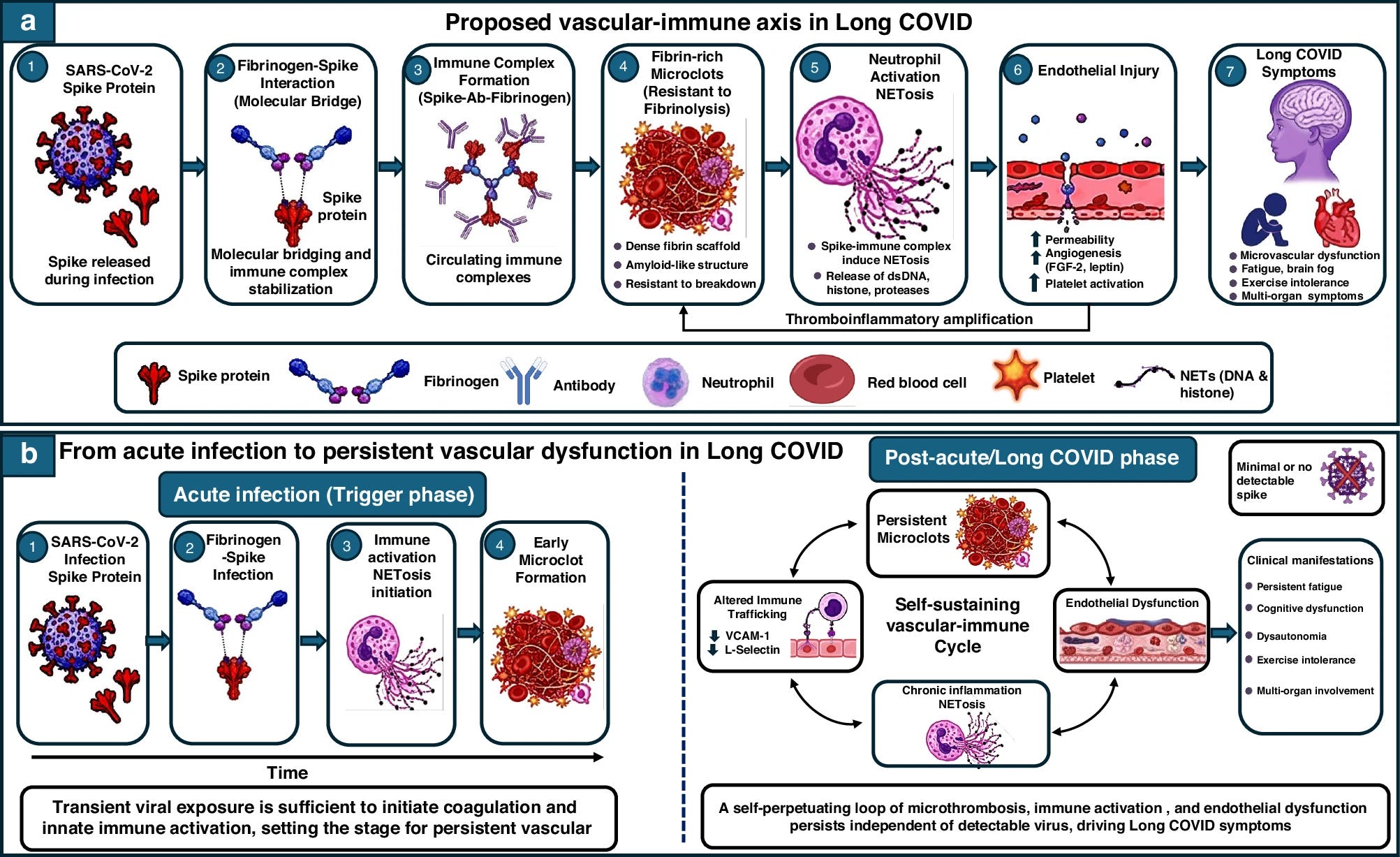
A new commentary in Pediatric Research reviewed a study of 84 young patients (61 with Long COVID and 23 healthy pediatric controls) which showed significantly elevated fibrin microclots and markers of blood vessel injury in children and young adults with Long COVID. Lab experiments showed that spike antibody- fibrinogen immune complexes triggered neutrophils to release DNA nets that directly damaged the cells lining blood vessel walls. Many of these vascular changes persisted even without detectable circulating spike protein, pointing to a self-sustaining, host-driven process rather than ongoing viral activity. The authors propose spike-fibrinogen interactions as a possible mechanistic link and that coagulation and innate immune pathways may be potential treatment targets.
Fig. 1: SARS-CoV-2 spike-fibrinogen interactions drive microclot formation and [pediatric] Long COVID pathogenesis.
From: https://www.nature.com/articles/s41390-026-05345-1/figures/1
Vaccines
COVID-19 vaccination timing, relative to acute COVID-19, and subsequent risk of long COVID | eBioMedicine (The Lancet) 7/27/26
A team at Stanford and UC Berkeley analyzed 519,980 patient records and found that receiving two or more COVID vaccine doses before infection was associated with a 16% reduction in the likelihood of developing Long COVID. A separate analysis of more than one million vaccinated patients found the protective effect held steady over seven months of follow up, with no significant waning.
ACE2-fused nanobody targeting a cryptic RBD epitope broadly neutralizes SARS-like viruses | Journal of Virology 7/30/26
Investigators at the University of Science and Technology of China identified a nanobody, derived from an alpaca, that binds a hidden site on the spike protein shared by all SARS-like coronaviruses. Fused to ACE2, it blocked viral entry through two distinct mechanisms and was 33 times more potent against SARS-CoV-2 pseudovirus.
Preventing Long COVID
Can long COVID be prevented? Two drugs finally show promise | Nature 7/29/26
Researchers at the University of Bergen and University of Minnesota ran trials in 144 and 2,983 participants respectively and found that Paxlovid reduced Long COVID symptoms at three months by 40%, while metformin cut clinician diagnosed cases at six months by about half. Both treatments now represent the strongest drug evidence yet for preventing the lasting health burden of acute COVID, though researchers still debate how Long COVID endpoints should be defined and measured.
I would also like to add that the FDA has approved Xocova (Ensitrelvir) for post-exposure prophylaxis against COVID infection in immunosuppressed patients who have a household contact with COVID. If you don’t get a COVID infection, then you won’t get Long COVID.
Long COVID
Persistent cytolytic CD8+ T cells recognize SARS-CoV-2 and herpesvirus epitopes in long COVID | Cell Reports Medicine 7/29/26
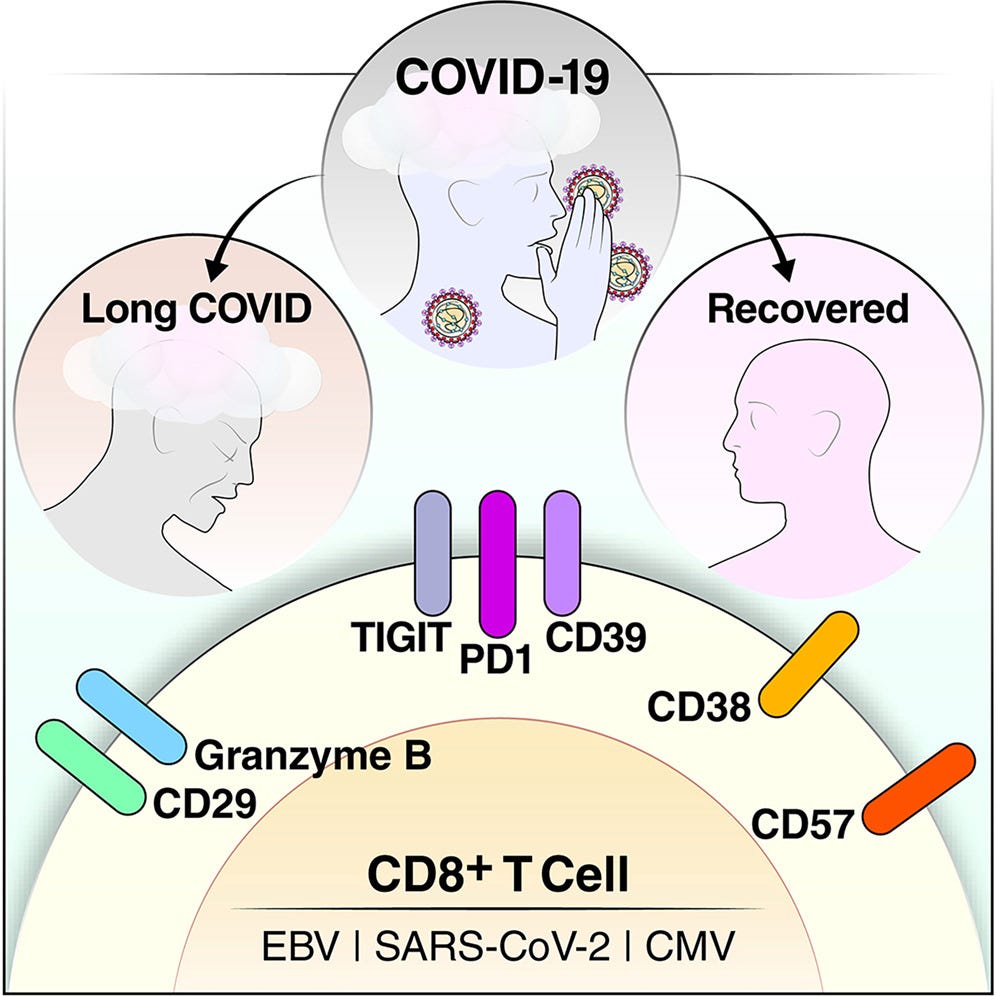
Scientists at Gladstone Institutes and UCSF studied 32 individuals and found that people with Long COVID have abnormally persistent, granzyme B enriched CD8+ T cells directed against SARS-CoV-2, CMV, and EBV. These killer T cells stayed stuck in a terminally differentiated state instead of resolving after infection as they normally would, and women had the most chronically persistent cells of this type.
Skeletal muscle properties in long COVID and ME/CFS differ from those induced by bed rest | Nature Communications (Wust lab) 7/28/26
A team at Vrije Universiteit Amsterdam studied 105 participants and found that skeletal muscle in people with Long COVID and ME/CFS showed impaired mitochondrial energy production and fewer capillaries relative to muscle size. These changes were distinct from those seen after 60 days of bed rest, showing that physical inactivity alone cannot explain the muscle deficits in Long COVID and ME/CFS.
Wearable Heart Rate Variability Monitoring, Autonomic Dysfunction and Post-exertional Malaise in Long COVID | Sports Medicine 7/25/26
Investigators at Vrije Universiteit Amsterdam studied 142 participants, 121 with Long COVID and 21 controls, and found that Long COVID was linked to lower heart rate variability and delayed autonomic recovery for up to 24 hours after exertion. Exercise at or above the first ventilatory threshold appeared to mark a higher risk zone for post-exertional malaise.
🧠 Neuroanatomical subtypes of Long COVID reveal distinct cognitive profiles alongside longitudinal brain changes | bioRxiv 7/30/26
A team at Dalhousie University in Halifax studied 42 people with persistent Long COVID cognitive symptoms and 14 matched healthy controls using brain MRI and cognitive testing. Clustering identified two distinct subgroups, one with reduced gray matter in the cerebellum and putamen and one with no structural differences. Gray matter density in the medial frontal cortex was found to increase over six months in a pattern tied to visuospatial and executive task performance, suggesting brain fog in Long COVID has more than one biological root.
🧠 Neuroinflammation, Pericyte Dysfunction, and Alzheimer’s Disease-Associated Gene Expression and Pathway Activation in the Brain of SARS-CoV-2-Infected Mice | Viruses 7/17/26
Researchers at SUNY Upstate Medical University studied 98 mice and found that by day 30, after the virus had cleared from the brain, pericyte loss, blood brain barrier damage, inflammation, and amyloid beta buildup all persisted, along with fewer hippocampal neurons. The cell death was driven by inflammation around the pericytes rather than direct viral infection of those cells, since no viral protein was detected inside them at any stage.
🧠 Longitudinal analysis reveals myeloid cell contributions to murine neuroPASC pathogenesis | Nature 7/30/26
Scientists at the University of Iowa found that brain microglia in mice remained in an inflammatory state for at least 100 days after SARS-CoV-2 infection, even with no evidence of active viral replication in brain tissue. Mitochondrial gene expression fell in these immune cells, pointing to metabolic disruption as a possible driver of neuro Long COVID.
🫀Losartan and prednisolone for post-COVID syndrome and cardiac inflammation | Nature Communications 7/30/26
A team at Goethe University Frankfurt enrolled 279 Long COVID participants with MRI confirmed heart inflammation in a randomized, double blind, placebo controlled trial testing losartan plus low dose prednisolone over 16 weeks. The combination produced no statistically significant improvement in the primary heart function outcome, offering no clear benefit for this patient group in the Myoflame-19 trial.
Longitudinal immune profiling of Long COVID phenotypes reveals a shared persistent IL-17F-centered immune signature | Nature Preprint 7/21/26
Researchers at the University of Antwerp followed 355 people for up to 24 months and measured 54 circulating immune biomarkers across respiratory, chronic pain, and chronic fatigue like Long COVID presentations. A persistently elevated IL-17F immune signal emerged as a common thread across these groups, pointing toward ongoing abnormal vascular and tissue repair rather than leftover inflammation from the original infection.
Necroptosis and Cellular Stress Characterize Immune and Endothelial Dysfunction in Long COVID | JACI 7/23/26
Scientists at the University of Miami examined blood from 73 Long COVID patients and 41 controls and found signs of necroptosis, a pro-inflammatory form of cell death, along with measurable stress in both endothelial and immune cells. Higher levels of an endothelial stress marker tracked with reduced vascular function and a greater symptom burden in people with Long COVID.
ADDRESS-LC: study protocol for a phase 2 trial of bezisterim in adults with long COVID | BMJ Open 2026
BioVie Pharma is launching a phase 2, triple blind, randomized, placebo controlled trial enrolling 203 adults in the US to test whether bezisterim, an oral drug that crosses the blood brain barrier, can reduce the cognitive impairment and fatigue of Long COVID by targeting toll-like receptor (TLR) driven neuroinflammation.
Measles
As of July 30, 2026, 2,371 measles cases have been reported in the United States so far in 2026.
Measles record (and hot questions) | Your Local Epidemiologist 7/28/26
“The US has now [as of 7/28/26] reported 2,318 measles cases in 2026, a 35 year record, driven by 35 separate outbreaks with five months still left in the year.
“Those 2,318 [measles] cases mean:
151 hospitalizations
~44,300 school days missed1
Many losing immunity to other viruses
~2 kids with permanent hearing loss
~1 kid will die in 10 years from brain disease
$204 million in costs”
According to Johns Hopkins, in the last 2 weeks, most measles cases have been seen in Pennsylvania, Delaware, and Clark, Washington.
Government Health News
Sen. Collins Announces State Department to Restore Full Contribution to GAVI | United States Senate Committee on Appropriations 7/28/26
In June 2025, HHS Secretary RFK Jr. announced that the US would halt funding for GAVI, the vaccine alliance that has immunized more than a billion children in low income countries since 2000. This week, the Senate Appropriations Committee announced that the State Department will release the full $600 million Congress appropriated for GAVI, after Chair Susan Collins pressed Secretary of State Marco Rubio to restore the frozen funding.
Other news
American Red Cross Declares Second-Ever National Blood Supply Crisis, Urges Immediate Blood Donations | American Red Cross 7/27/26
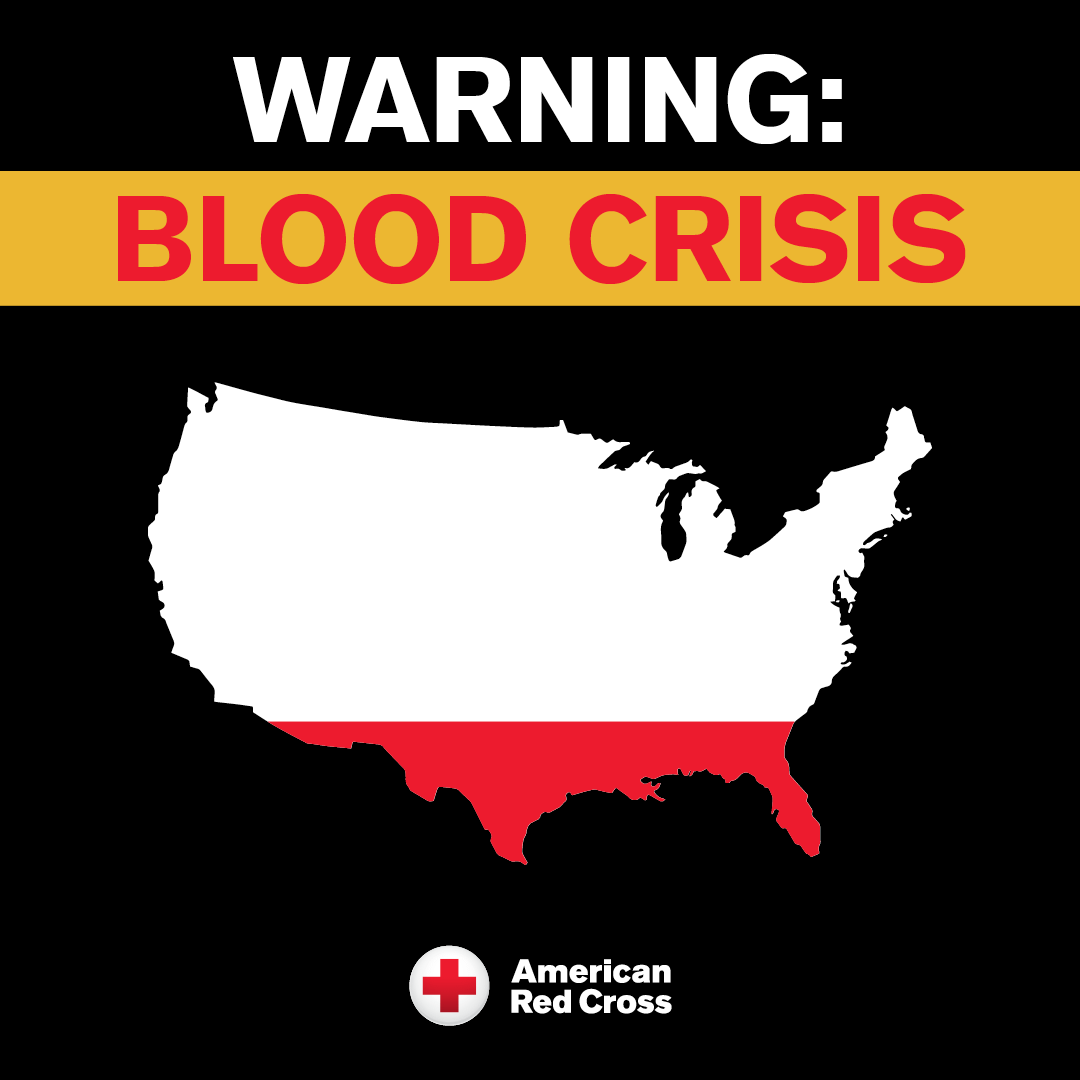
The American Red Cross has declared its second ever national blood supply crisis after donations fell to a four year summer low, and the organization is now limiting distribution of type O blood to hospitals. Extreme heat, poor air quality, and foodborne illness may have contributed to the low donor turnout this summer. The Red Cross urges eligible donors to give blood immediately.
The hallmarks of protein and amino acid restriction in aging and longevity | Cell Press Blue 7/31/26
It turns out that high protein diets may not be good for longevity. A team at the University of Wisconsin-Madison reviewed over 350 studies and concluded that restricting protein or specific amino acids like methionine, isoleucine and valine can improve metabolic health and extend lifespan in animals. The effect works partly by raising FGF21, a hormone linked to longevity.
New [In Vitro] Evidence That Microplastics Can Cross Placental Barrier And Alter Hormone Production | Science Alert 8/2/26
Investigators at Vrije Universiteit Amsterdam built a three-layer human placenta model, combining placental, umbilical vein and adrenal cells, to trace plastic particle movement across the placenta rather than relying on animal studies. Most microplastic polymers tested crossed the in vitro placental barrier within 72 hours and they altered steroid hormone production.
New blood-based biomarkers predict when ALS symptoms will emerge | NIH.gov 7/27/26
Researchers at the University of Miami identified 19 blood proteins, including neurofilament light chain, that predict when ALS symptoms will emerge in people carrying disease linked genes. Using data from 137 study participants, the model estimated symptom onset within about 18 months of the actual date.
New technologies could help cut years-long wait for endometriosis diagnosis | National Institute for Health and Care Excellence (NICE) 7/7/26
The National Institute for Health and Care Excellence (NICE) issued draft guidance recommending two new tests, EndoSure and Endotest, to speed endometriosis diagnosis in England and Wales. Endometriosis affects about 1 in 10 women worldwide and currently takes 4 to 11 years to diagnose. Endotest looks at miRNAs in saliva to diagnose endometriosis and EndoSure can detect endometriosis by measuring electrical signals in the intestines using ECG-like sensor pads.
PDE5a Inhibition Restricts Cancer Metastasis by Disrupting NPC1-Mediated Cholesterol Trafficking Through a Non-canonical cGMP-Dependent Pathway | Cancer Research 7/14/26
Researchers at the Weizmann Institute of Science found that sildenafil (Viagra) may help stop cancer from spreading by disrupting how cholesterol is managed in cancer cells. Sildenafil traps cholesterol inside cancer cell lysosomes by binding cGMP to the transporter NPC1, weakening membranes and blocking metastasis in mouse and human models. Patient records showed better survival among sildenafil users, with added benefit when combined with statins.
After a stranger gifts a boy with autism a piano, he dazzles the world: “He’s Mozart level” | CBS News 8/1/26
A 9-year old autistic boy named Jude Kofie found an old electric keyboard in his family’s basement, sat down and started playing complete songs without ever having had a lesson. His natural ability stunned Bill Magnus who saw a local news story about Jude. Magnus decided to use his inheritance to buy Jude a piano and pay for piano lessons. Now age 14, Jude has started performing and has even released an album.

CBS News
I’ll be taking the next 2 weeks off from the newsletter.
Enjoy your summer,
Ruth Ann Crystal MD
References & Notes on COVID
COVID Current Epidemic Trends: https://www.cdc.gov/cfa-modeling-and-forecasting/rt-estimates/?tab=0
The weekly percentage of ED visits diagnosed with COVID-19 is very low. Probability COVID-19 epidemic is growing: 96% (growing)
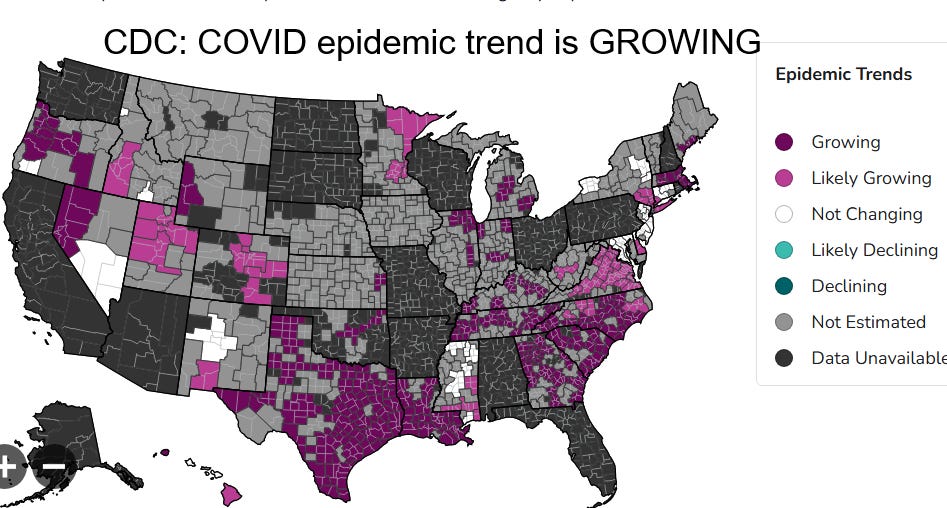
EPIC Research https://www.epicresearch.org/data-tracker/communicable-diseases/
JP Weiland: https://twitter.com/JPWeiland https://bsky.app/profile/jpweiland.bsky.social
“PJ.2.1 is a brand new, highly mutated variant (from a BA.2.86 Pirola base)
It’s looking to me like it may have some speed 👀
Will continue to monitor this one. Most interesting variant in a good while.”
Michael Hoerger modeling: http://pmc19.com/data/, https://twitter.com/michael_hoerger
Find the complete PMC dashboard at http://pmc19.com/data
US by State: https://pmc19.com/data/index.php#states
Worldwide data: https://pmc19.com/data/index.php#internationa
Mike Hoerger’s data will update tomorrow 8/3/26.
Wastewater
Wastewater SCAN (omits 12 states): https://buff.ly/lYIhRGJ
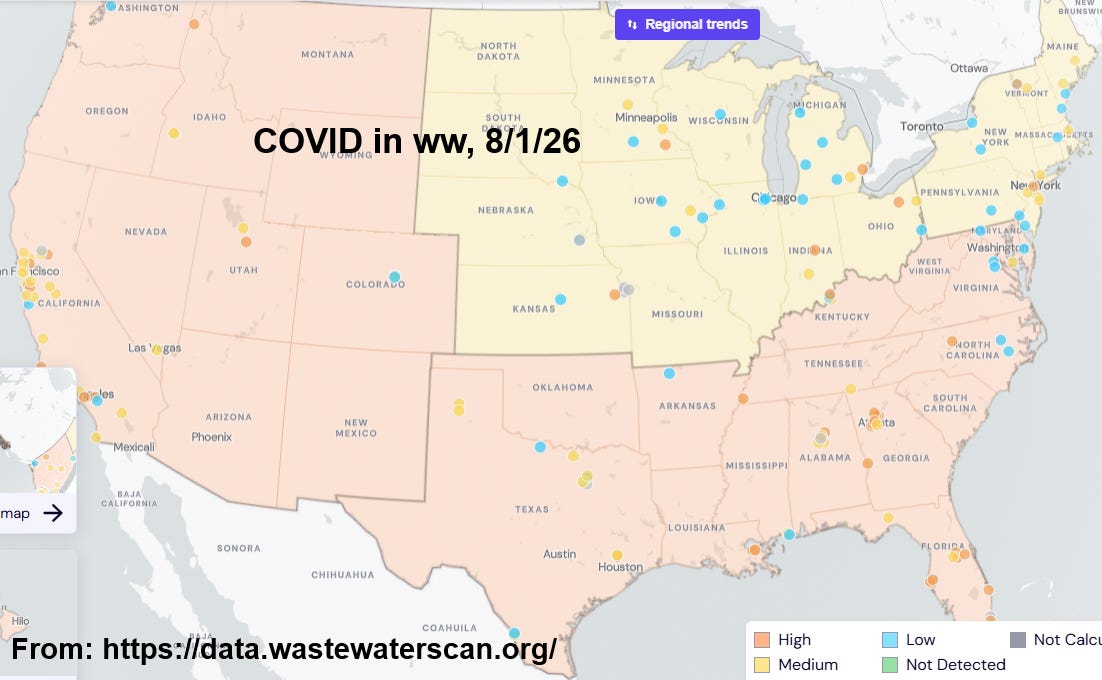
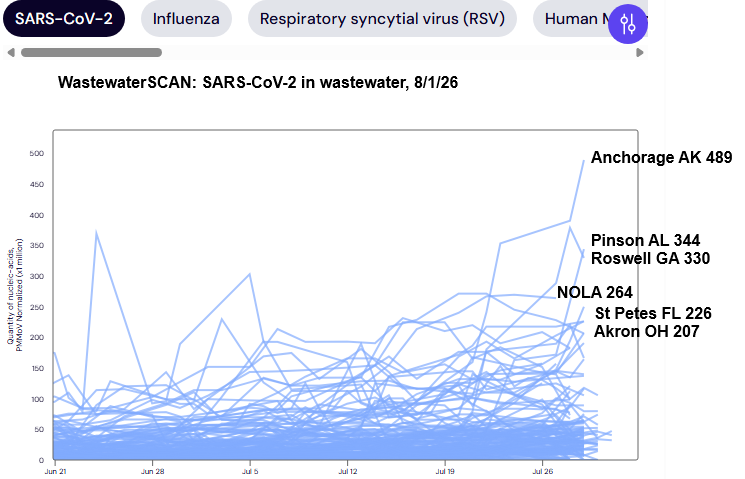
CDC COVID wastewater reporting through 7/25/26: https://www.cdc.gov/nwss/rv/COVID19-nationaltrend.html
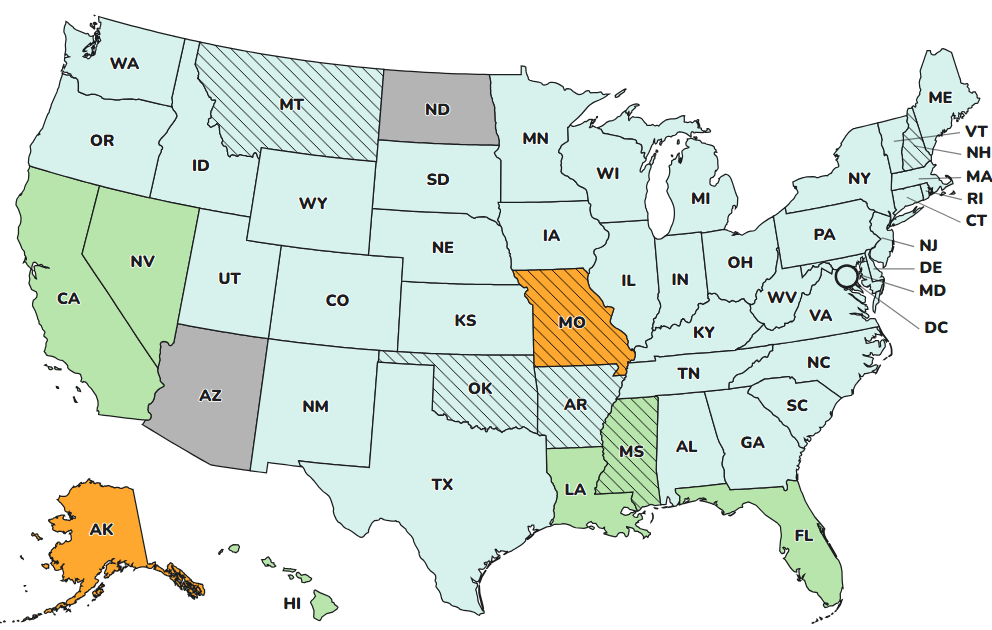
Mike Hoerger’s data will update tomorrow 8/3/26 at http://pmc19.com/data/.
CDC SARS-CoV-2 Wastewater STATE TRENDS
California: CDC California
Alameda County, Fresno, SLO- Very High through 7/25/26 per CDC.
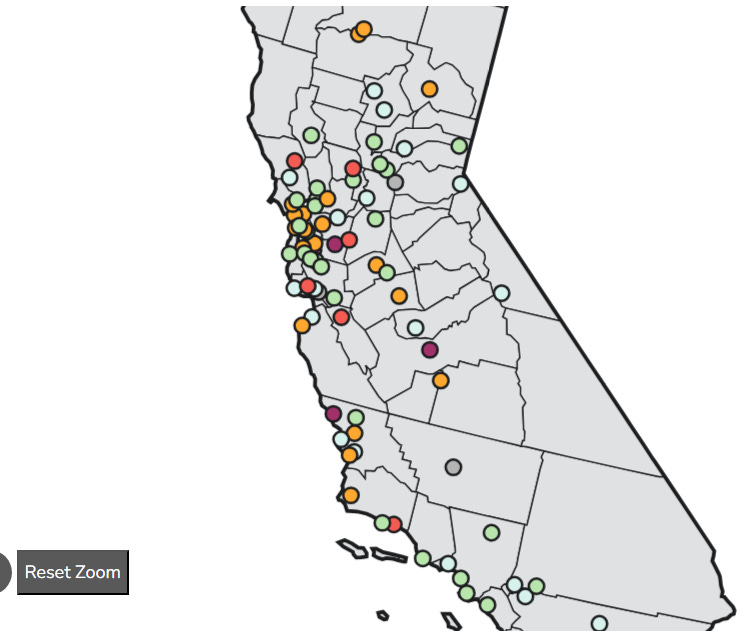
California: WastewaterSCAN California
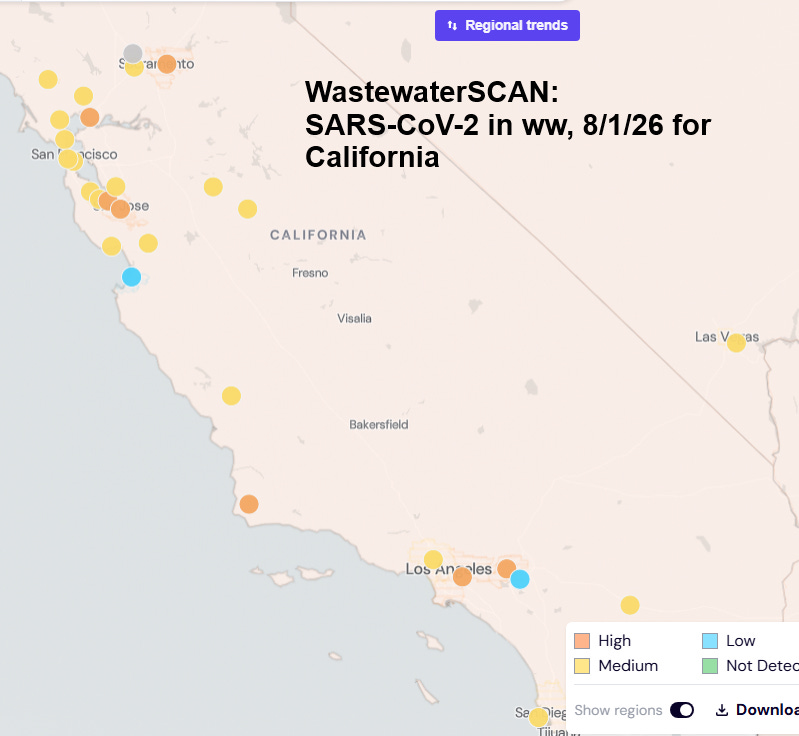
Highest is Oceanside SF 106 PPMoV, Fremont is 98 PPMoV.
Central Valley Area: WastewaterSCAN Central Valley
Los Angeles Area: WastewaterSCAN Greater LA
San Francisco Bay Area: WastewaterSCAN Greater SF Bay Area | WastewaterSCAN Marin County
California CDPH SARS-CoV-2 https://skylab.cdph.ca.gov/calwws/
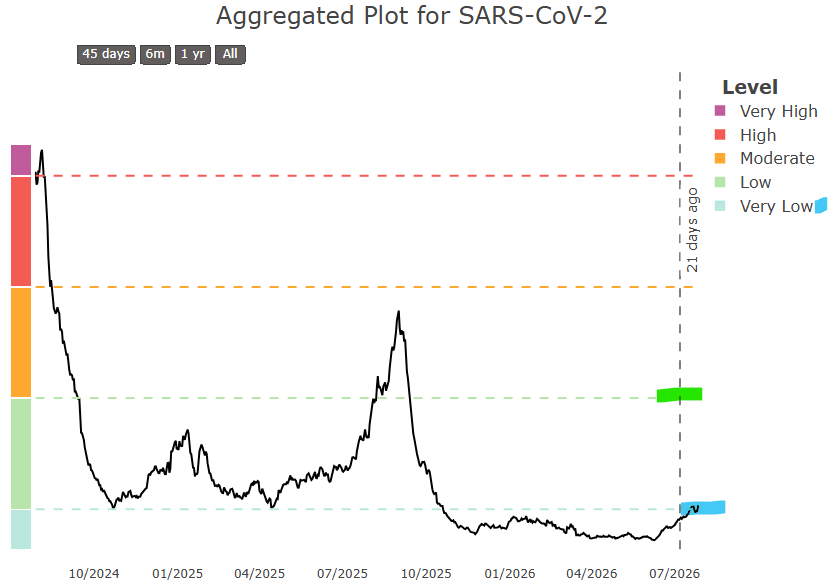
California COVID wastewater levels have gone from very low to low:
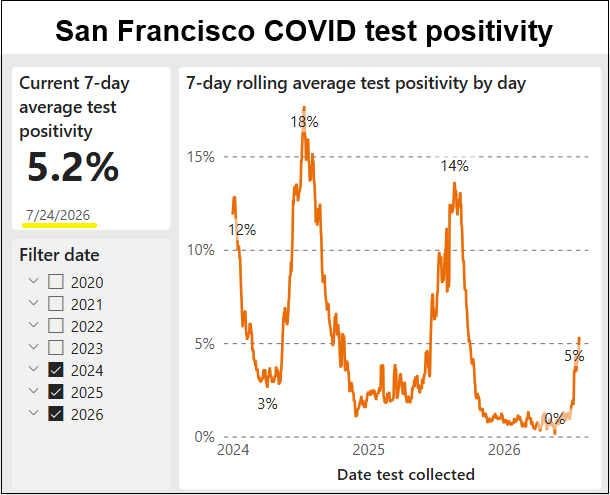
San Francisco COVID positivity rate: https://www.sf.gov/data--covid-19-testing-overview
7/24/26
SARS-CoV-2 International Surveillance
Mike Hoerger https://pmc19.com/data/index.php#international
Austria: Federal Government of Austria |
Canada: C19 Resources Canada * | World Health Network (WHN) Canada ** | Tara Moriarty Canadian COVID data | Canada national wastewater
Finland: WHN Finland **
Germany: WHN Germany **
Netherlands: WHN Netherlands **
Australia: Mike Honey
UK:
UKHSA Dashboard | UK BuDS | UK COVID PCR Test Positivity Map | Wastewater monitoring in Scotland | Bob Hawkins on UK and Europe
Europe
https://arcgis.jrc.ec.europa.eu/portal/apps/dashboards/e296cdf0c0d042e6b60b07a351f2dc5c
Hi Dr. Ruth, I have not thanked you for a long time or let you know how much I appreciate your taking the time to do this newsletter which I always read when it comes out. Information for the public on Covid is hard to find and you are providing an important public health service.
Thanks for your continued efforts and sharing latest info. 💪💙